
Loading Scrappy
Preparing interactive spatial analytics & data...
Loading Scrappy
Preparing interactive spatial analytics & data...
Learn how premium F&B and supermarkets use Scrappy's Malaysia demographic data and catchment analysis to target high-income condominiums.
In the fiercely stratified Malaysian supermarket sector, attempting to compete on price and scale against mass-market giants is a race to the bottom. Premium grocers, such as Village Grocer, operate on a fundamentally inverted economic paradigm. Their survival, margin expansion, and profitability rely not on absolute footfall, but on capturing high-margin basket sizes generated exclusively by the T20 (Top 20%) demographic. For these premium operators, expansion is not a game of geographical dominance; it is a highly surgical strike. The strategy demands absolute spatial precision—being exactly where ultra-high-net-worth individuals live, commute, and consolidate their premium spending.
Historically, identifying wealthy catchments was straightforward: expansion teams simply targeted established landed property enclaves like Bangsar, Damansara Heights, or Bukit Tunku. Today, the urban landscape has evolved, creating a highly complex, three-dimensional spatial challenge for premium retail acquisition teams:

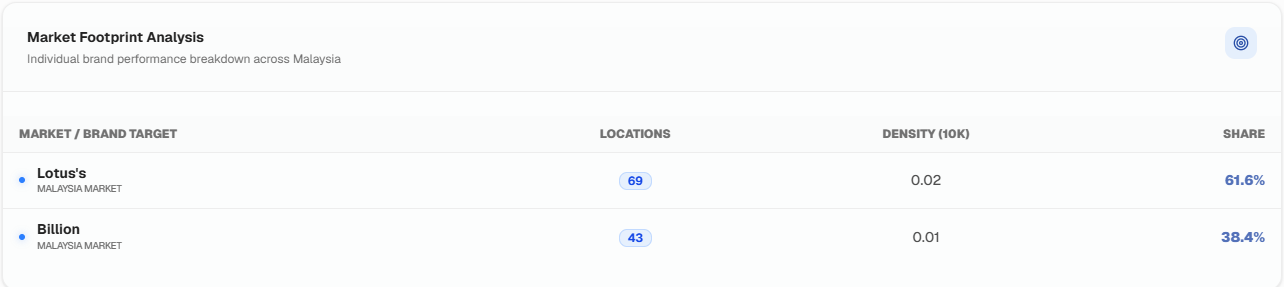
By mapping existing outlets in relation to competitor brand networks on a single 2D map view, Scrappy helped the team move away from slow manual spreadsheet scouting to instant geographic gap mapping.
Load Village Grocer directly into the Scrappy dashboard and explore the raw spatial data yourself.
Analyze Data Now