
Loading Scrappy
Preparing interactive spatial analytics & data...
Loading Scrappy
Preparing interactive spatial analytics & data...
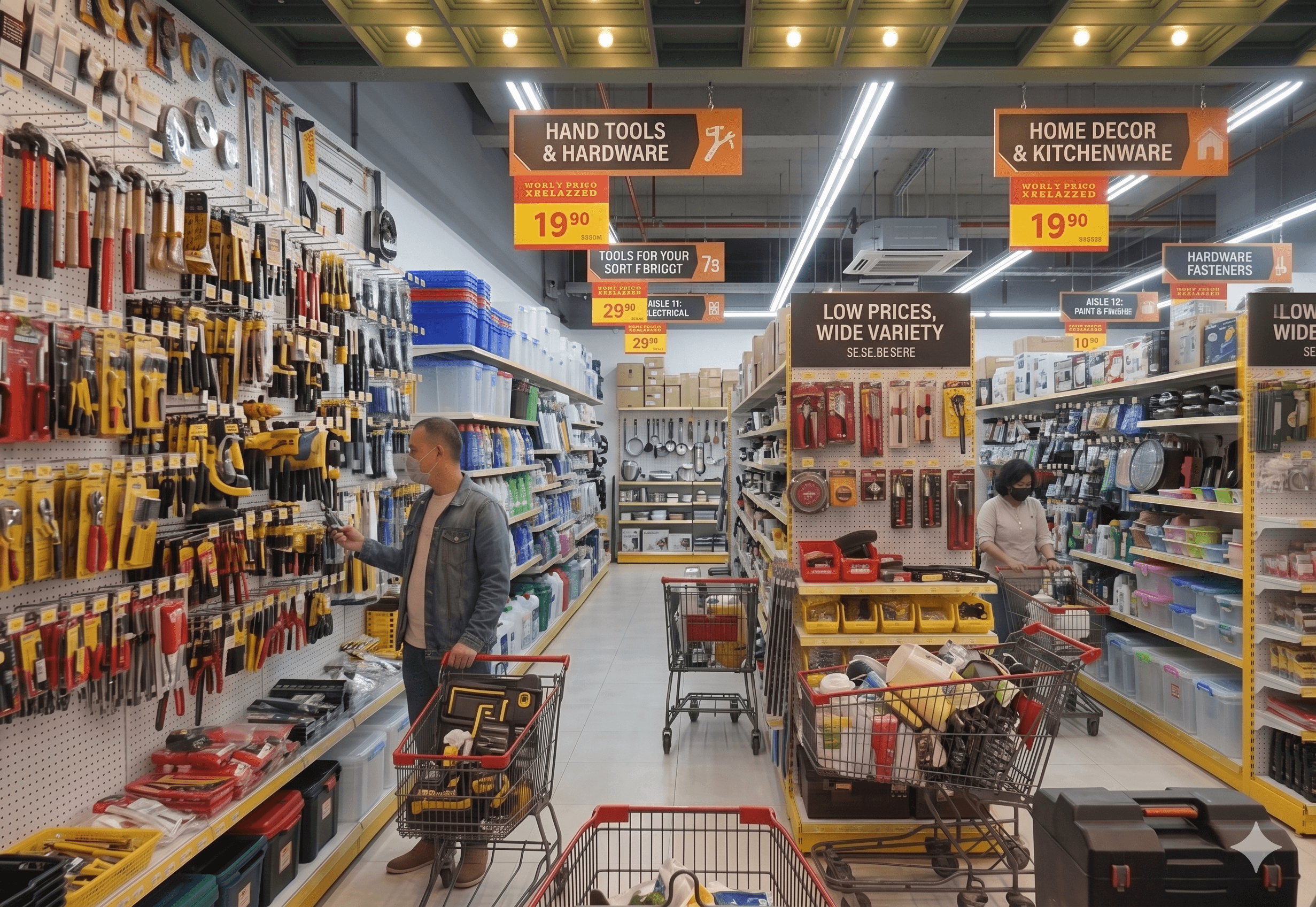
How large hardware and lifestyle retailers strike the perfect balance between commercial real estate rent and catchment coverage in Malaysia.
Mega-retailers like MR DIY have not merely participated in the Malaysian retail landscape; they have fundamentally redefined it as undisputed "Category Killers." Their economic moat is built on overwhelming consumers with an exhaustive variety of inventory—routinely exceeding 15,000 to 20,000 active SKUs. To physically house and merchandise this massive product matrix, these operators require colossal floor plates, typically consuming 10,000 to 20,000 square feet per outlet.
This extreme spatial requirement creates a brutal tension at the core of their unit economics. Unlike high-margin luxury boutiques, a mega-hardware and lifestyle retailer relies on high-volume, low-ticket transactions. Expansion teams are consequently trapped in a continuous, high-stakes balancing act between necessary scale and commercial real estate economics, facing three distinct spatial dilemmas:

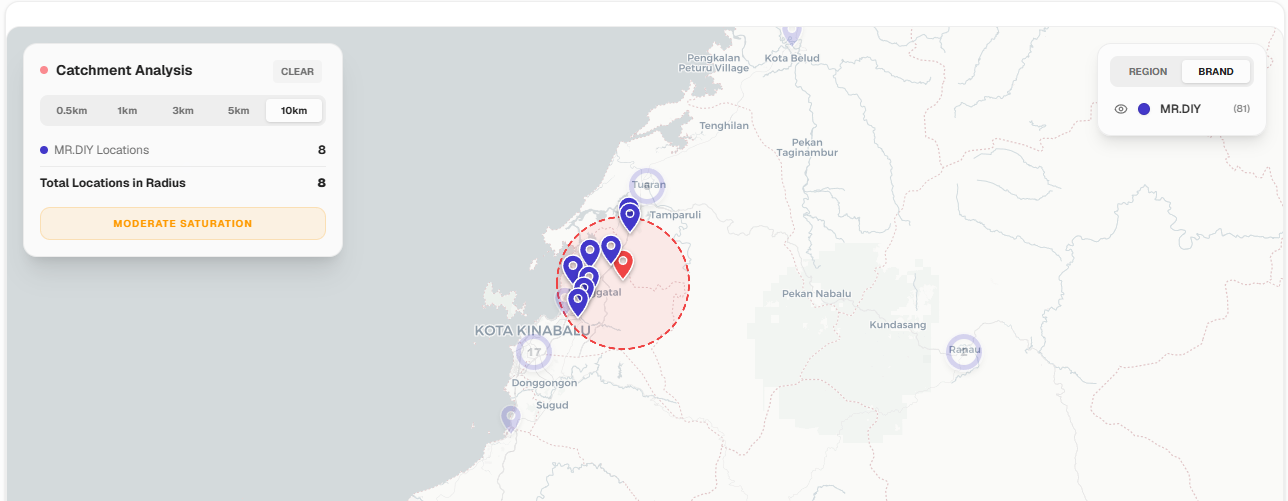
By mapping existing outlets in relation to competitor brand networks on a single 2D map view, Scrappy helped the team move away from slow manual spreadsheet scouting to instant geographic gap mapping.
Load Retail directly into the Scrappy dashboard and explore the raw spatial data yourself.
Analyze Data Now